17 SEP 2026
Choosing a hospitality uniform supplier in Dubai is not simply about finding a company that can provide shirts, trousers, jackets, or aprons at the lowest price. Hospitality uniforms need to work across different roles, working conditions, and customer-facing situations while maintaining a consistent brand image.
For a hotel, restaurant, resort, cafe, catering company,ny or other hospitality business, the right supplier should be able to understand the requirements of different departments, recommend suitable fabrics and designs, manage sizing, handle brandi,ng and deliver uniforms consistently when new employees join or existing uniforms need replacement.
With so many suppliers offering different levels of customization, quality, and service, how do you know which one is right for your business?
Here is a practical guide to help you evaluate hospitality uniform suppliers in Dubai and make a better purchasing decision.
Choosing a hospitality uniform supplier should start with understanding what your business actually needs. Instead of comparing suppliers based only on price, consider whether they can provide the right combination of quality, comfort, functionality, customization, and consistent service.
Here are some key factors to consider before making your decision:
Choose a supplier familiar with the requirements of hotels, restaurants, resorts and other hospitality businesses. Different departments have different uniform needs, so relevant experience can make the selection and ordering process much easier.
Ask about the fabrics available and whether they are suitable for the working conditions in Dubai. The uniforms should be comfortable for long shifts while being durable enough for regular washing and daily use.
If your uniforms need to reflect your brand, check whether the supplier can customize colours, designs, fits, logos, embroidery and accessories according to your requirements.
Before placing a large order, find out whether the supplier can provide samples and support staff measurements or fittings. This can help identify design or sizing issues before bulk production begins.
Do not compare suppliers only by the lowest price per garment. Consider what is included in the quotation, such as customization, tailoring, branding, delivery, and future replacement requirements.
Ask about lead times before placing the order, particularly if you are preparing for a hotel opening, renovation or large-scale staff change. The supplier should be able to provide a realistic production and delivery schedule.
Your uniform requirements will continue after the initial order. Employees may join or leave, garments may become damaged, and additional uniforms may be required. Choose a supplier that can maintain consistent designs and specifications for future orders.
Ask how the supplier handles defective garments, incorrect sizing, damaged items or urgent replacement requirements. Reliable after-sales support can be just as important as the initial order.
Ultimately, the right hospitality uniform supplier should be able to provide more than uniforms. They should be capable of supporting your business with consistent quality, practical designs, and reliable service from the first order through future replacements.
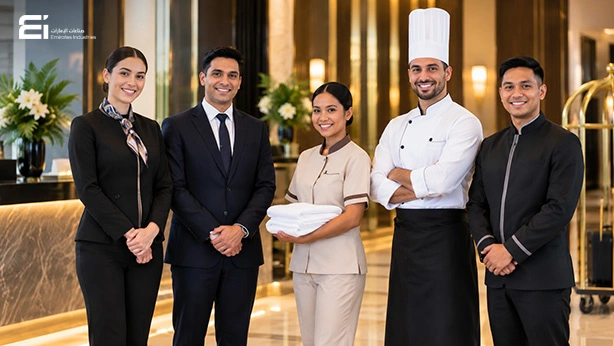
Hospitality businesses rarely need one uniform design for everyone. A hotel, for example, may have completely different requirements for reception, housekeeping, food and beverage, kitchen, concierge, maintenance and security staff.
Depending on your business, you may need:
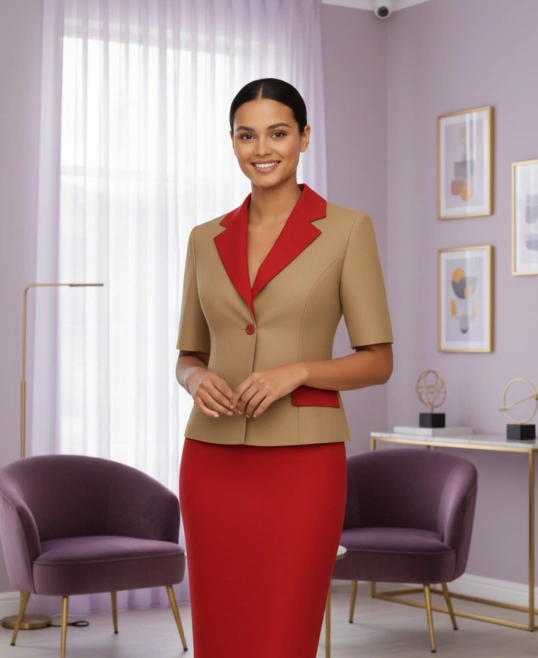
Reception staff are among the first employees guests encounter. Their uniforms therefore, need to look polished while remaining comfortable enough for long working hours.
Depending on the hotel's style, this could include shirts, trousers, skirts, dresses, waistcoats, blazers, jackets, ties, or scarves.
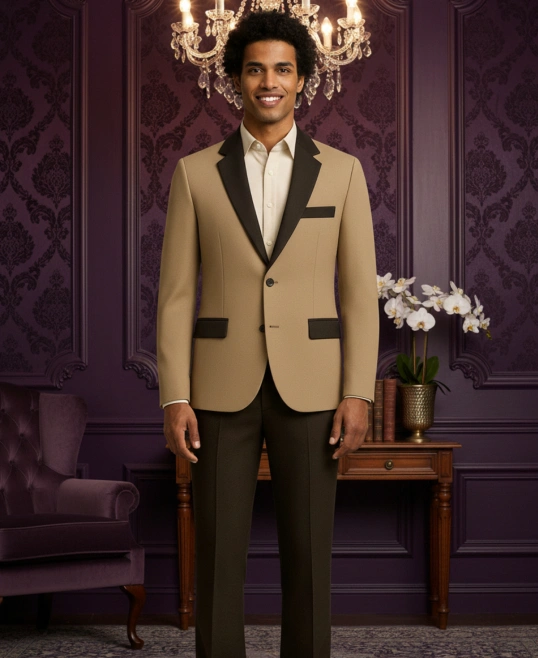
Concierge and guest-service teams often require a more formal appearance because they interact directly with guests throughout the day.
The uniform should make the employee easily identifiable while fitting naturally with the property's overall visual identity.
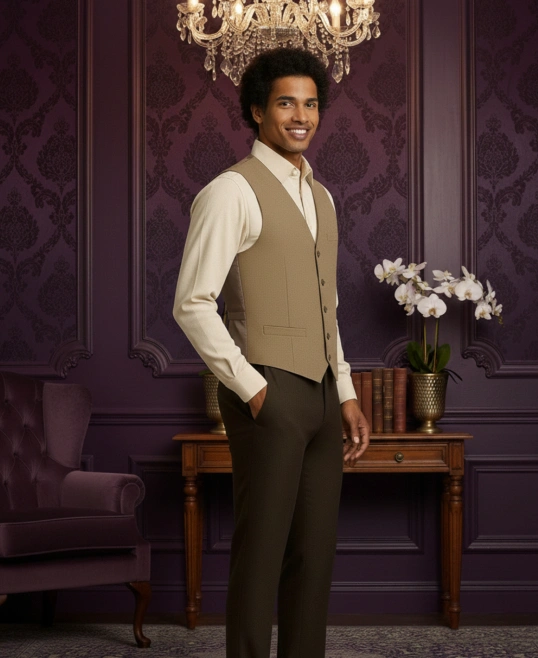
Waiters, servers, hosts, and other F&B employees may require a different combination of shirts, waistcoats, trousers, skirts, aprons, and accessories.
The design should balance appearance with freedom of movement, particularly for employees who spend most of their shift standing or moving between tables.
Kitchen staff have different requirements from front-of-house employees. Their uniforms need to prioritize practicality, movement, and suitability for a demanding working environment.
Chef coats, kitchen trousers, aprons, caps, and related garments can be selected according to the specific kitchen operation.
Housekeeping employees’ uniforms allow comfortable movement during physically active shifts.
Durability, easy care, appropriate fit, and fabric performance should therefore be considered alongside appearance.
Hotels and resorts with spas, salons, pools or recreational facilities may require specialized uniforms that have a different look and functionality from standard hotel uniforms.
A good supplier should be able to maintain a consistent brand identity while adapting the uniform to each role.
Fabric selection is one of the most important decisions when ordering hospitality uniforms in Dubai.
Employees may work long shifts, spend considerable time standing or moving around, and in some roles, may regularly move between indoor and outdoor environments. A fabric that looks good initially but becomes uncomfortable during extended wear is unlikely to be a good long-term choice.
When comparing fabrics, ask about:
The right fabric depends on the role. A formal reception uniform, for example, may have different requirements from a housekeeping or kitchen uniform.
Yes. Branding is one of the common requirements for hospitality uniforms.
A supplier may be able to add your logo through embroidery, printing or other branding techniques depending on the garment and design.
However, adding a logo is only one part of uniform customization.
A stronger uniform programme considers how the logo, colours, garment style and accessories work together.
For example, a luxury hotel may want a formal and understated uniform, while a casual beach resort may prefer lighter and more relaxed designs.
The uniform should therefore support the identity that guests already associate with the property.
Start by defining how you want guests to perceive your business.
Ask:
The objective is not to make every employee look exactly the same. It is to create a consistent visual language across different roles.
This is particularly important for hotels where front-office, F&B, housekeeping and back-of-house employees have very different functional requirements.
There is no single fixed price for hospitality uniforms because the final cost depends on several variables.
These can include:
For example, a basic ready-made garment and a fully tailored branded uniform should not be expected to have the same price.
When comparing quotations, avoid looking only at the price per piece. Instead, compare what is included in the quotation and whether the supplier can maintain the same quality when you place future orders.
Cost control does not necessarily mean choosing the cheapest uniform. You can reduce the overall cost by planning the programme carefully.
Consider:
Lead time depends on the design, quantity, customization, and production requirements. A standard ready-made order may be handled differently from a large custom programme requiring sampling, fitting, and production.
If you are opening a new hotel or restaurant, do not leave uniforms until the final stage of the opening process.
Discuss the timeline with the supplier early and establish:
This gives you a clearer idea of when the uniforms will actually be ready.
Sizing can have a significant effect on both employee comfort and appearance. A supplier should ideally have a clear sizing process rather than asking you to select quantities based only on generic size labels.
For larger teams, consider:
Before committing to a supplier, ask practical questions such as:
1. Do you have experience supplying hospitality businesses?
Look for experience relevant to your type of operation rather than experience in unrelated uniform categories.
2. Can you customize the designs?
Ask about fabrics, colours, branding, embroidery, trims and other options.
3. Can you provide samples before bulk production?
A sample allows you to assess fit, fabric, and appearance before committing to the full order.
4. What is the expected production time?
Make sure the timeline works with your opening date or operational requirements.
5. Can you handle replacement and repeat orders?
This becomes important when employees join, leave, or require replacement uniforms.
6. How do you handle sizing?
Ask whether the supplier provides measurement or fitting assistance.
7. What happens if there is a defect or sizing problem?
Clarify the supplier's replacement or correction process before placing the order.
8. Can you maintain the same specifications for future orders?
This is particularly important for hotels that need uniforms over several years.
Reliability is about more than delivering one order on time.
A dependable supplier should be able to provide consistency across:
This is one reason why it is useful to think of your uniform supplier as a long-term procurement partner rather than simply a clothing vendor. A supplier that understands your approved designs and specifications can make future replacement orders much easier.
There is no universal replacement period.
Uniforms should generally be reviewed based on their actual condition and the demands of the role.
Signs that a uniform may need replacement include:
High-use uniforms may need replacement more frequently than garments used occasionally. It is useful to establish an internal uniform policy so employees and managers understand when replacements should be requested.
Even high-quality uniforms need proper care. Follow the garment's recommended washing and care instructions and make sure employees understand them.
Your uniform policy can include guidelines covering:
For hotels and restaurants with large teams, maintaining a simple inventory system can also help identify which employees require replacements and which sizes need to be reordered.
Several purchasing mistakes can create problems later.
Before making your final decision, check whether the supplier can meet these requirements:
Requirement |
What to Check |
| Hospitality experience | Relevant hotel, restaurant or resort experience |
| Fabric | Comfort, durability and suitability for the role |
| Design | Professional and aligned with your brand |
| Customization | Colours, cuts, logos and accessories |
| Sampling | Ability to approve samples before production |
| Sizing | Size range and fitting support |
| Bulk orders | Capacity for your required quantity |
| Lead time | Production and delivery schedule |
| Quality | Consistency across the order |
| Reordering | Ability to reproduce approved uniforms |
| Replacement | Process for defective or damaged items |
| Pricing | Overall value rather than just unit cost |
| Communication | Clear and responsive project coordination |
Choosing the right hospitality uniform supplier in Dubai is about more than finding uniforms at a suitable price. Hotels, restaurants and other hospitality businesses need uniforms that combine professional appearance, everyday comfort, practical functionality and consistent quality.
At Emirates Industries, we understand that hospitality uniforms play an important role in how employees present themselves and how a brand is perceived by its guests. From selecting suitable uniform styles and materials to accommodating different roles and branding requirements, every aspect needs to be considered according to the business's specific needs.
Whether you are setting up uniforms for a new hospitality business, updating an existing collection, or arranging uniforms for a growing team, working with an experienced supplier can make the process more organized and efficient.
The right uniform should work for your employees, complement your brand, and remain practical throughout the working day. With the right planning and supplier, hospitality businesses can create a uniform programme that delivers both a professional appearance and lasting value.
Compare suppliers based on hospitality experience, fabric quality, customization, sizing, production capacity, lead time, pricing, quality control and after-sales or reordering support.
Look for a supplier that understands different hotel departments and can provide suitable uniforms for front office, housekeeping, F&B, kitchen and other roles while maintaining a consistent brand identity.
Yes. Depending on the supplier and garment, uniforms can generally be customized through embroidery, printing, colours, trims and other design elements.
There is no single fabric that is best for every hospitality role. Fabric should be selected according to the employee's working conditions, comfort requirements, durability needs and maintenance process.
Yes. Many hospitality uniform suppliers can provide uniforms for multiple hotel departments, allowing businesses to coordinate different roles under one overall uniform programme.
Yes. Hospitality uniform programmes can generally be supplied in multiple sizes. For large teams, ask the supplier about sizing charts, measurements, samples and fitting support.
Ready-made uniforms may be suitable when speed and simplicity are priorities. Custom uniforms are more appropriate when you want specific designs, colours, branding or role-based requirements.
There is no fixed replacement period. Replacement should depend on garment condition, frequency of use, wear, damage, fading, fit and the requirements of the role.
Ask about fabric, customization, samples, sizing, minimum quantities, production time, delivery, quality control, replacement policies, future reorders and pricing.
Keep approved specifications for the garment design, fabric, colours, branding and sizing. Choose a supplier that can reproduce those specifications for future orders.
Planning new uniforms for your hotel, restaurant, resort or hospitality team? Emirates Industries can help you explore uniform solutions tailored to your brand, staff roles and operational requirements.
Get in touch with Emirates Industries to discuss your hospitality uniform requirements and find the right solution for your team.
 Schools
A school uniform is more than a dress code, it shapes behavior, unity, and discipline. Ei delivers well-fitted, breathable, and durable uniforms for students and staff alike. Designed with identity in mind and built to withstand the energy of young learners.



 Healthcare
In healthcare, movement is constant and hygiene is non-negotiable. Ei provides uniforms that are breathable, antibacterial, made for long hours on your feet. We ensure comfort without compromise so your team can focus on what matters: care



 Hospitality
From guest-facing roles to operational teams. With breathable fabrics, refined silhouettes, and easy-care design, we ensure your team feels confident and looks the part — day in, day out
 Oil & Gas
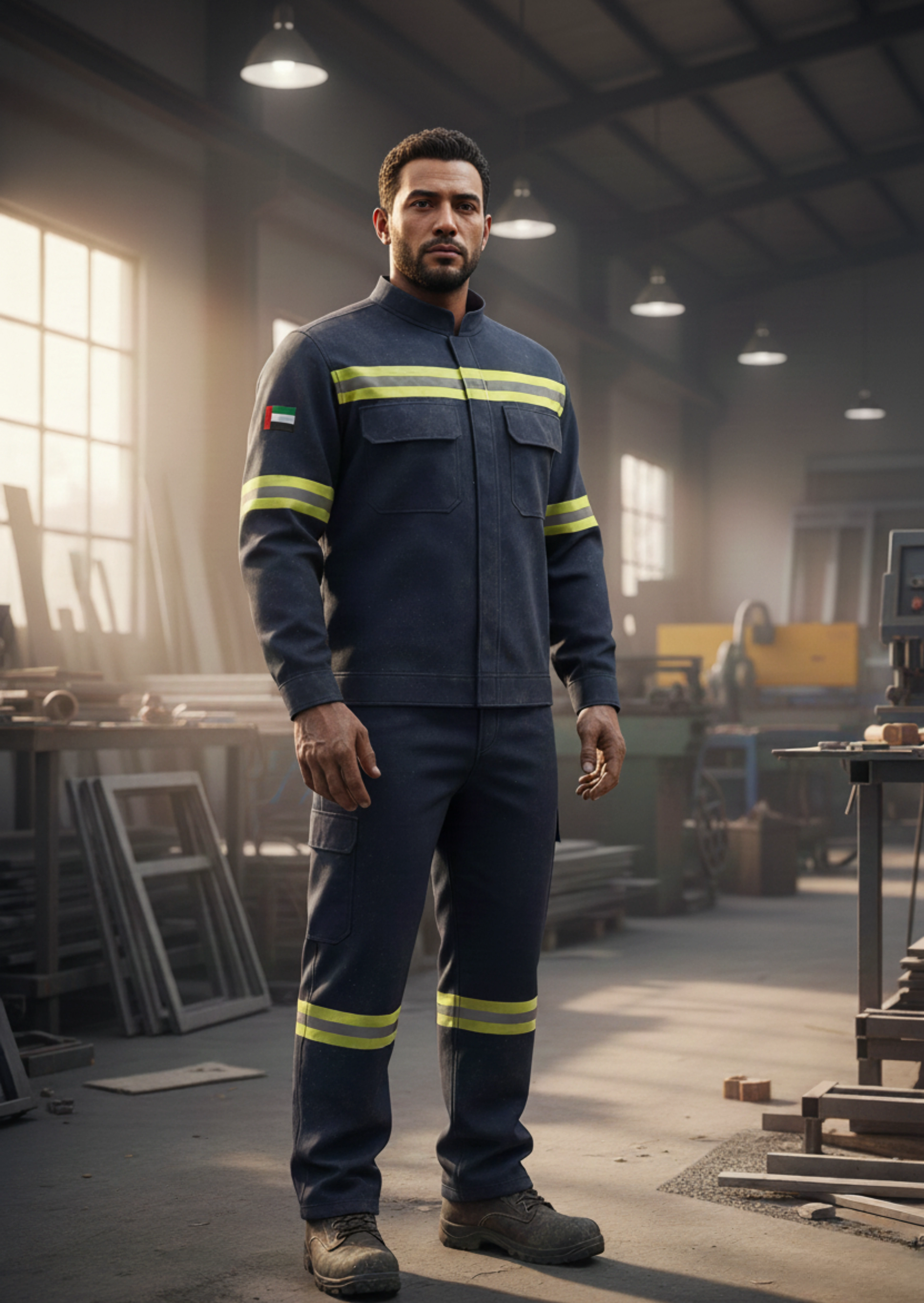
In oil and gas, failure isn’t an option. Ei delivers flame-resistant, anti-static, and durable uniforms engineered to meet strict safety regulations and harsh climate demands. Designed for long shifts, rough terrain, and critical tasks, our gear holds up where it matters most — in the field.


 Government
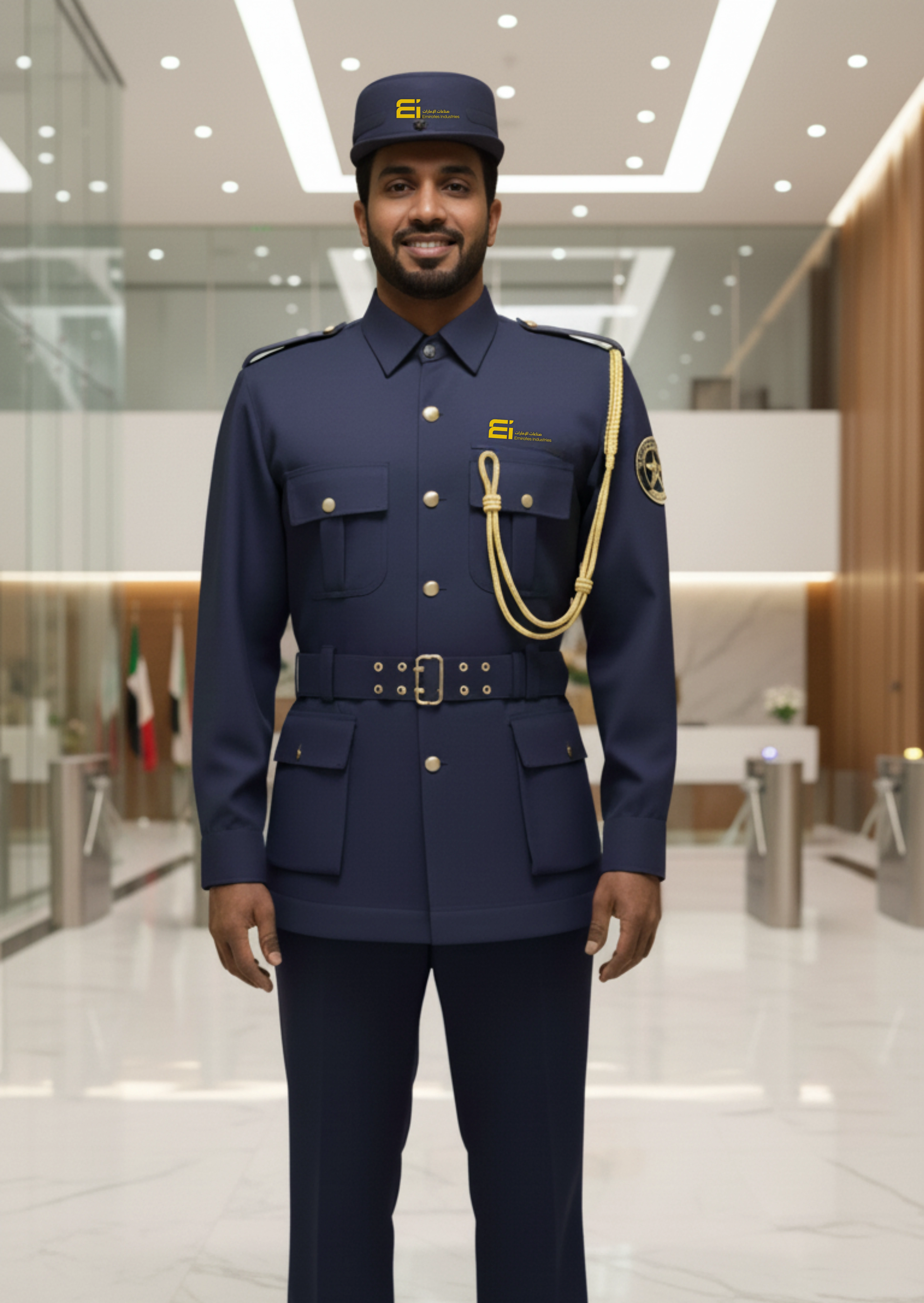
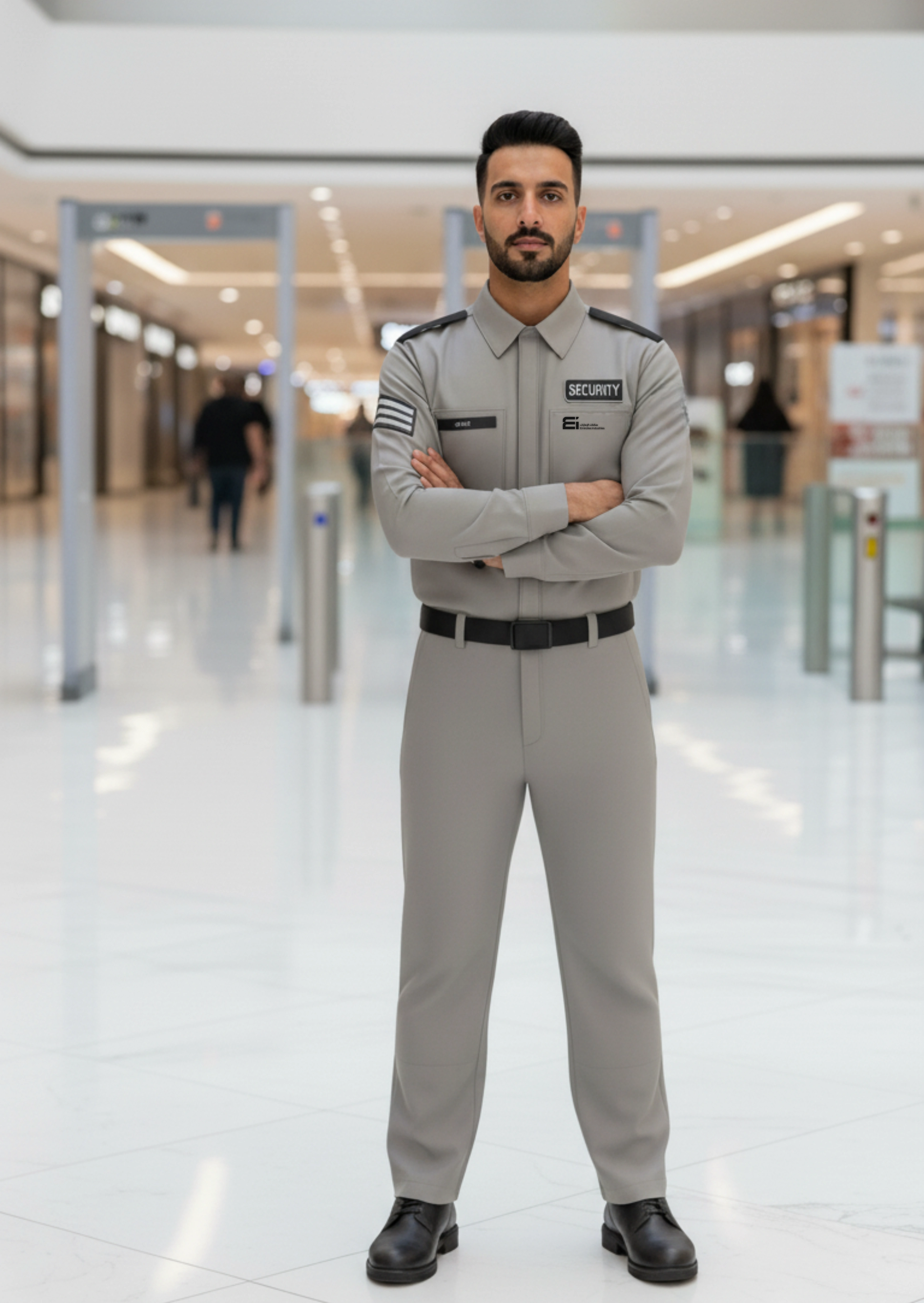
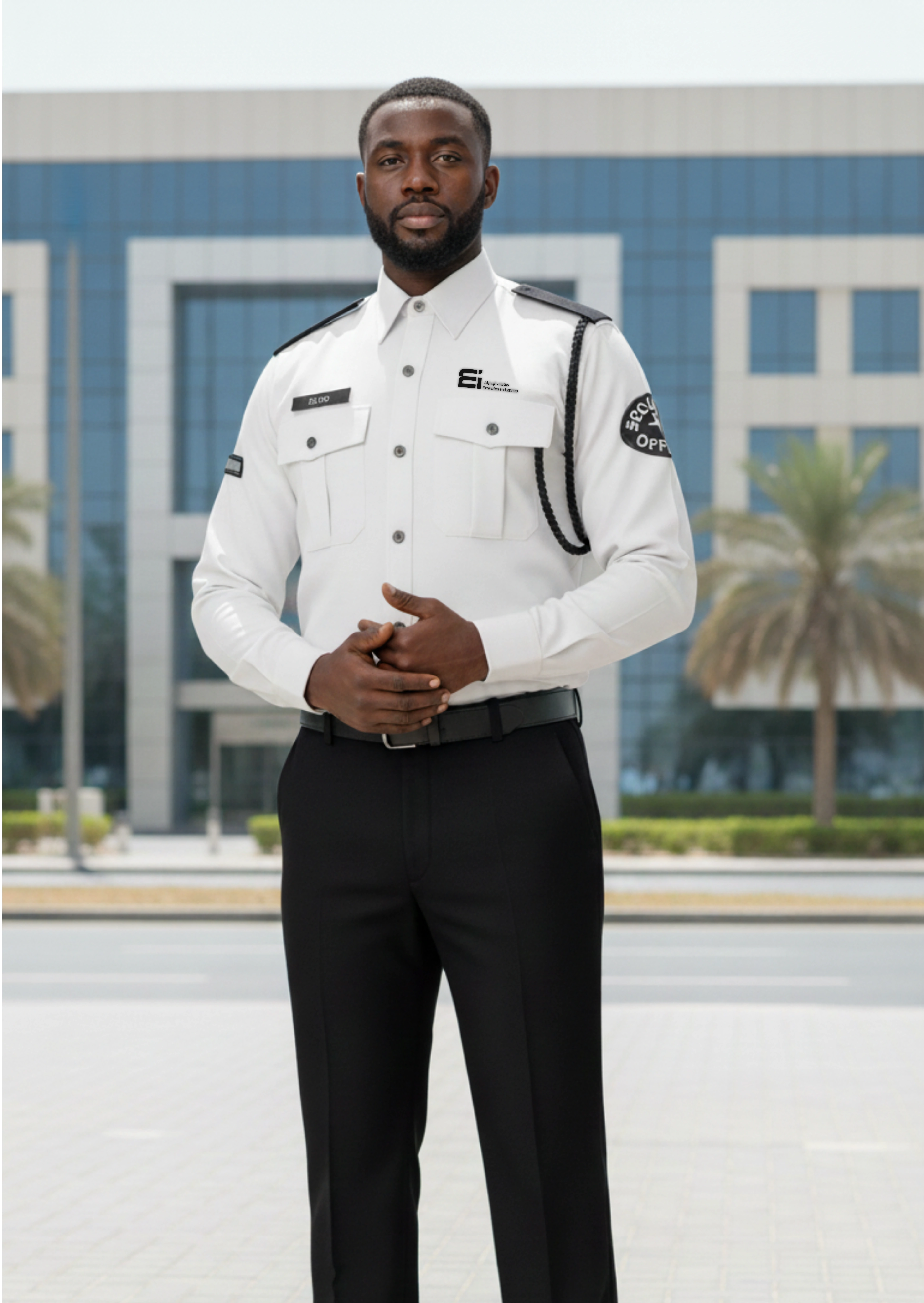
Public service uniforms carry the weight of representation. Ei creates clean, structured, regulation-compliant attire that reflects authority, reliability, and respect. We offer scalable solutions that uphold dignity in every detail.
The primary focus, supplying uniforms for students, staff, and administration.
Medical scrubs, lab coats, and PPE for hospitals and clinics